Protein Calculator
Calculate your daily protein requirements based on your activity level and goals
Enter Your Details
Daily Protein Requirement
—
Protein Needs by Goal
| Goal | g / kg bodyweight | g / lb bodyweight | Total per day |
|---|---|---|---|
| — | |||
Your Ultimate Protein Intake Calculator for Any Fitness Goal
Navigating the world of fitness and nutrition can feel overwhelming. One of the most common questions I hear as a fitness coach is, “How much protein do I actually need?” You’ve likely heard conflicting advice—eat more to build muscle, eat less for other goals, or that a certain magic number applies to everyone. The truth is, your protein needs are unique to you, your body, and your goals. This is where a specialized tool becomes your best friend.
Welcome to our comprehensive protein intake calculator. Right at the top of the page, you’ll see a prominent purple box featuring a 💪 flexed bicep icon and the clear title: “Protein Calculator.” This isn’t just a generic tool; it’s your personal guide to demystifying your dietary needs. The short description below the title explains its core purpose: to provide a precise, science-backed estimate of your daily protein requirements.
Whether you’re aiming to lose weight, build lean muscle, or simply maintain your current physique, understanding your personalized protein target is fundamental to success. This powerful protein intake calculator cuts through the noise and confusion. Instead of relying on vague guidelines or one-size-fits-all recommendations, it empowers you to discover exactly what your body needs to thrive. By inputting a few key details about yourself, you will receive a clear, actionable number that serves as the foundation for your nutritional strategy, setting you on the right path toward achieving your fitness aspirations.
A Step-by-Step Guide to Using the Protein Intake Calculator
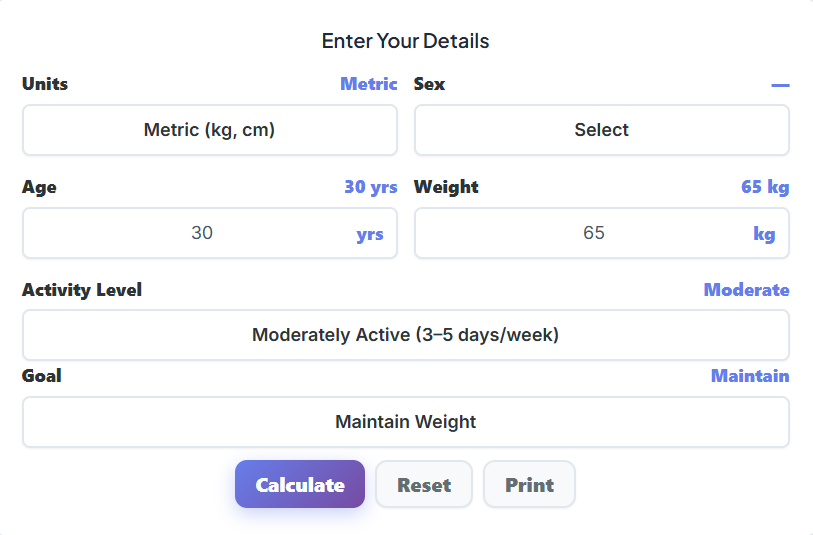
Now that you understand what this tool is for, let’s walk through exactly how to use it. The input section is designed to be simple and intuitive, gathering the essential information needed to give you a truly personalized recommendation. Think of it as a quick consultation where you provide the key details, and our protein intake calculator does the heavy lifting. This intuitive design makes it the best protein intake calculator for both beginners and seasoned athletes.
Units Selector: Metric vs. Imperial
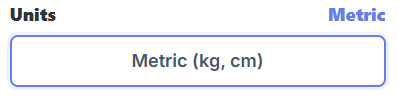
The first step is to choose the measurement system you’re most comfortable with. At the top of the form, you’ll see a simple toggle for “Metric” and “Imperial” units. This feature instantly tailors the tool to your preference.
If you select “Imperial,” the weight input will ask for pounds (lb). If you switch to “Metric,” it will automatically update to ask for kilograms (kg). This ensures you can enter your information quickly without needing to do any manual conversions. The labels update in real-time, making the experience seamless as you calculate protein needs.
Sex: Why It Matters for Your Protein Calculation

Next, you’ll select your biological sex. This is a crucial factor because body composition—the ratio of muscle to fat—often differs between males and females. Generally, men have a higher percentage of lean body mass, which is more metabolically active and requires more protein to maintain and build.
By specifying your sex, you’re giving the protein intake calculator a more accurate baseline to work from. This refinement helps ensure the final recommendation for your amount of daily protein is better suited to your body’s physiological makeup. For example, a male and female of the same weight and activity level may receive slightly different recommendations from this protein calculator.
Age: The Impact on Metabolism and Protein Needs
Your age plays a significant role in your body’s metabolic rate and its ability to synthesize protein. As we get older, our metabolism tends to slow down, and we can experience a natural decline in muscle mass, a condition known as sarcopenia.
To counteract this, older adults often require a higher protein intake to preserve muscle tissue and support overall health. Younger individuals, especially those still growing, also have unique needs. Entering your age allows the protein intake calculator to adjust its formula, providing a more appropriate protein target for your specific life stage.
Weight: The Foundation of Your Protein Target
Your current body weight is one of the most important variables in this calculation. Protein recommendations are typically expressed in grams per kilogram (g/kg) or grams per pound (g/lb) of body weight. For instance, a common question is how much protein per kg is ideal for muscle growth. This tool answers that for you.
By inputting your weight, you provide the core number that the calculator will use to determine your total daily protein requirement. Whether you’re a 120-pound marathon runner or a 220-pound powerlifter, your weight serves as the foundation for a truly personalized result. This protein intake calculator uses this value to scale the recommendation directly to your body size.
Activity Level: How Your Lifestyle Changes Your Needs
This dropdown menu is where you tell the calculator about your daily movement. Honesty here is key to getting an accurate result. Let’s break down the options:
- Sedentary: You have a desk job and do very little or no formal exercise.
- Light: You might walk for 30-60 minutes a day or perform light exercise 1-3 times per week.
- Moderate: You engage in moderately intense exercise 3-5 days per week.
- Very Active: You participate in vigorous exercise or sports 6-7 days a week.
- Extra Active: You have a physically demanding job and also train hard, or you are a professional athlete.
The more active you are, the more protein you need. Exercise creates micro-tears in your muscle fibers, and protein provides the amino acids necessary to repair that damage and build your muscles back stronger. A sedentary person’s needs are vastly different from an elite athlete’s, and this setting ensures your amount of daily protein reflects your unique energy expenditure and recovery demands. This makes our tool a highly adaptable protein intake calculator.
Goal: Aligning Your Protein with Your Ambitions
What are you trying to achieve? This final dropdown is perhaps the most critical for tailoring your results. Your protein needs will change significantly depending on your primary fitness objective.
- Maintain: If your goal is to maintain your current weight and body composition, the calculator will provide a solid baseline intake to support your health and current muscle mass.
- Lose Weight: When you’re in a calorie deficit to lose fat, a higher protein intake is crucial. Protein helps preserve lean muscle mass, which can otherwise be lost along with fat. It also promotes satiety, helping you feel fuller for longer and manage hunger. Many people find using a protein intake calculator essential during a cutting phase.
- Gain Muscle: To build new muscle tissue (hypertrophy), you need a surplus of amino acids. Selecting this goal will increase your recommended protein intake to support muscle repair and growth, ensuring your body has the raw materials it needs to build.
Choosing the right goal here is essential when you calculate protein needs, as it directly influences the final number the tool provides. It’s the key to transforming a generic number into a targeted strategy.
The Action Buttons: Calculate, Reset, and Print
Once you’ve filled in all your details, you have three simple options at the bottom of the form:
- Calculate: This is the magic button. Click it, and the protein intake calculator will instantly process your information and display your personalized results.
- Reset: Made a mistake or want to start over? The “Reset” button clears all the input fields, giving you a blank slate.
- Print: This handy feature allows you to save or print a physical copy of your results. This is perfect for sticking on your fridge or taking with you to the grocery store as a reminder of your daily target.
Understanding Your Personalized Protein Results
After you click “Calculate,” the protein intake calculator reveals your results in a clear and easy-to-understand format. This section isn’t just a number; it’s a comprehensive breakdown that empowers you to make informed nutritional decisions. Let’s look at what the output means for you.
Your Daily Protein Requirement: The Big Number
The most prominent result you’ll see is a large number displayed in grams. This is your primary target—the recommended amount of daily protein you should aim for each day based on the specific inputs you provided.
Beneath this number, a short, personalized description explains the context. For instance, if your goal was “Lose Weight,” the text might explain that this higher protein amount is designed to help preserve muscle while you’re in a calorie deficit. If you chose “Gain Muscle,” it will state that the figure is optimized to support muscle growth and repair. This immediate feedback makes the result from the protein intake calculator actionable and easy to understand.
I remember working with a client, Sarah, who was struggling to lose weight. She was cutting calories but felt constantly hungry and was losing strength in the gym. We used a protein intake calculator to find her optimal intake for weight loss. By increasing her protein from 70g to 120g per day, she felt more satisfied after meals, maintained her strength, and started seeing the fat loss she wanted. It was a game-changer.
The Protein Needs Table: A Comparative Overview
Below your main target, you’ll find a detailed “Protein Needs” table. This is one of the most valuable features of this protein calculator, as it provides a broader perspective on your nutritional requirements. The table displays protein recommendations for all three goals—Maintain, Weight Loss, and Muscle Gain—side by side.
Each row in the table corresponds to a goal and breaks down the recommendation in three ways:
- g/kg: Grams of protein per kilogram of body weight. This is the standard metric used by nutrition scientists and answers the common question, “how much protein per kg should I be eating?”
- g/lb: Grams of protein per pound of body weight. This is useful for those more familiar with the imperial system.
- Total g/day: The total grams of protein recommended per day for that specific goal. This provides the final, actionable number for your daily planning.
This comparative table is incredibly insightful. Perhaps you’re currently focused on muscle gain, but you’re curious about what your maintenance intake would be later. Or maybe you’re deciding between a maintenance phase and a fat loss phase. This table allows you to see exactly how much protein per day you would need for each scenario without having to run the protein intake calculator again. It puts the power of long-term planning right at your fingertips.
Understanding your nutritional needs goes beyond just protein. For a complete picture of your body’s requirements, you should also know your basal metabolic rate, which is the number of calories your body burns at rest. You can easily find this with a BMR Calculator.
Advanced Features for a Seamless User Experience
A good tool doesn’t just give you the right answer; it makes the process of finding that answer easy and enjoyable. This protein intake calculator is packed with thoughtful features designed to create a smooth, intuitive experience from start to finish.
Live-Updating Labels and Previews
As you enter your information, you’ll notice that the labels update in real-time. When you type in your age, a small preview appears. The same happens when you enter your weight or select your activity level. This instant feedback confirms that the protein intake calculator has registered your input correctly, providing a sense of confidence and clarity as you move through the form. It’s a small detail that eliminates guesswork and makes the tool feel responsive and intelligent.
Auto-Updating Units for Effortless Conversion
One of the most user-friendly aspects is how the tool handles units. When you toggle between “Metric” and “Imperial,” all relevant fields and results instantly convert. If you entered your weight in pounds and then switch to metric, the calculator automatically shows you the kilogram equivalent.
More importantly, the output table also adjusts, displaying your results in both g/kg and g/lb formats, no matter which system you started with. This removes any need for manual math and makes the information accessible to everyone. This is a key reason why many consider this the most practical protein intake calculator available.
Print and Export: Your Protein Target on the Go
The “Print” function is more than just a button; it’s a bridge between the digital tool and your daily life. Clicking it generates a clean, printer-friendly version of your results. You can save it as a PDF on your phone or computer, or print a hard copy to stick on your refrigerator.
Imagine heading to the grocery store with a clear list in mind, knowing you need to buy enough chicken, Greek yogurt, and beans to hit your 150g protein target. A client of mine, a busy professional named Mark, used this feature to plan his weekly meals. Having his protein number from the protein intake calculator printed out helped him stay on track, even with a hectic schedule. Knowing how much protein per day he needed made meal prep simple and effective.
Putting It All Together: From Numbers to Nutrition
Using a protein intake calculator is the first step. The next is turning that number into a sustainable eating plan. If the calculator recommends 140 grams of protein per day, how do you actually achieve that?
Start by familiarizing yourself with protein-rich foods. A 4-ounce chicken breast contains about 35g of protein. A scoop of whey protein powder has around 25g. A cup of Greek yogurt offers about 20g. By learning these values, you can start building meals that add up to your target.
Spreading your protein intake throughout the day is also a great strategy. Instead of trying to eat a huge amount in one or two meals, aim for 25-40g of protein in each of your main meals and snacks. This approach can improve muscle protein synthesis and help manage hunger levels more effectively.
Remember that a balanced diet is key. While this protein intake calculator helps you dial in one crucial macronutrient, don’t forget about carbohydrates for energy and healthy fats for hormone function. Proper hydration is also non-negotiable for performance and recovery; a Water Intake Calculator can help you determine your daily fluid needs. Similarly, monitoring your exertion during workouts is vital, and a Heart Rate Calculator is a great tool for finding your optimal training zones.
This advanced protein calculator is designed to give you a reliable and personalized starting point. I once coached a bodybuilder who was convinced he needed over 300g of protein per day because that’s what he read on a forum. After using a reliable protein intake calculator and assessing his actual needs based on his weight and activity, we found his optimal range was closer to 220g. By adjusting his intake, he freed up calories for more carbohydrates, which improved his energy and performance in the gym, ultimately leading to better results. This shows that more isn’t always better—smarter is better.
Using this tool to calculate protein needs accurately empowers you to move beyond guesswork and nutritional myths. It allows you to build a diet that is scientifically tailored to your body and your ambitions. This simple, effective protein intake calculator can be the catalyst that transforms your approach to fitness and helps you finally achieve the results you’ve been working so hard for. Don’t wait to take control of your nutrition—find your number today.
FAQS
How do I know if the recommendation from the protein intake calculator is right for me?
The protein intake calculator provides a fantastic, science-backed starting point based on your personal data like age, weight, activity level, and goals. Think of this number as your baseline. The best way to know if it’s right for you is to apply it consistently for a few weeks and observe how you feel. Are your energy levels good? Are you recovering well from workouts? Are you making progress toward your goal (losing fat, building muscle, or maintaining)? If so, you’re on the right track! You can always adjust slightly up or down based on your personal results and how your body responds.
Does it matter when I eat my protein?
For most people, the most important thing is hitting your total daily protein target consistently. However, for optimal results, especially if your goal is muscle gain or improved recovery, it’s beneficial to spread your protein intake evenly throughout the day. Aiming for 20-40 grams of protein per meal (including breakfast, lunch, and dinner) and in your post-workout snack helps provide your muscles with a steady supply of amino acids for repair and growth. It can also help with satiety and keeping hunger at bay.
I’m trying to lose weight. Why does the calculator suggest a higher protein intake?
This is a great question and a key strategy for effective fat loss. When you’re in a calorie deficit to lose weight, your body can sometimes break down muscle tissue for energy along with fat. A higher protein intake helps prevent this muscle loss, ensuring that the weight you lose is primarily from fat. Additionally, protein is the most satiating macronutrient, meaning it helps you feel fuller for longer. This can make it much easier to stick to your calorie deficit without feeling constantly hungry.