Customer Data
Understanding the Lifetime Value of a Customer Calculator
Imagine knowing the total worth of each customer to your business over their entire relationship with you. This isn’t just a hypothetical number; it’s a powerful metric that can shape your marketing, sales, and customer service strategies. Understanding this figure is the key to sustainable growth.
Our lifetime value of a customer calculator is designed to demystify this crucial calculation, providing clear, actionable insights without complex math. This guide will walk you through every component of the tool, showing you how to transform simple business data into a strategic advantage. We will explore what customer lifetime value is, how to measure it, and why it is one of the most important metrics for any business owner, from a new SaaS founder to an established e-commerce retailer.
What is Customer Lifetime Value (CLV)?
At its core, Customer Lifetime Value (CLV or CLTV) is a prediction of the net profit attributed to the entire future relationship with a customer. Instead of just looking at a single purchase, CLV considers the total revenue a customer is expected to generate for your business as long as they remain a customer. It’s a forward-looking metric that helps you understand the long-term health of your company.
Why Lifetime Customer Value Matters for Businesses
Focusing on lifetime customer value shifts a business’s perspective from short-term gains to long-term relationship building. This is critical for several reasons:
- Informed Marketing Spend: Knowing what a customer is worth allows you to make smarter decisions about how much you can afford to spend to acquire a new one. If the average CLV is high, you can justify a higher customer acquisition cost (CAC).
- Improved Customer Retention: When you understand the value of a loyal customer, you naturally prioritize strategies to keep them happy. High CLV is often a direct result of strong customer retention.
- Enhanced Profitability: Acquiring a new customer is almost always more expensive than retaining an existing one. By focusing on increasing the value of your current customers, you can boost your overall profitability.
- Better Business Forecasting: CLV provides a more stable and predictable indicator of future revenue, which is invaluable for financial planning and making strategic decisions, such as whether to use a Rent vs Buy Calculator for a new office space.
The Difference Between CLV, LTV, and Client Lifetime Value
You might see several terms used interchangeably: CLV, LTV, and client lifetime value. While they often refer to the same concept, there can be subtle differences in context.
- CLV (Customer Lifetime Value): This is the most common and widely accepted term, generally referring to the profit a business expects from a typical customer.
- LTV (Lifetime Value): This is a shorter version of the same term. Sometimes, LTV is used to refer to the total revenue, while CLV specifies the net profit. However, in most modern business discussions, both are understood to mean profit. Our calculator focuses on profit-driven metrics.
- Client Lifetime Value: This term is often used in service-based industries or B2B contexts where relationships are built with “clients” rather than “customers” (e.g., consulting firms, marketing agencies). The underlying principle remains the same.
Essentially, these terms all point to the same goal: calculating the total net worth of a customer over time. Our lifetime value of a customer calculator standardizes this process for you.
The Lifetime Value Formula, Explained Simply
Calculating CLV can seem intimidating, with various formulas floating around. The core idea, however, is straightforward. At its simplest, the lifetime value formula involves taking the average value of a customer’s purchases and multiplying it by how long you expect them to remain a customer.
A basic way to calculate CLV is:
(Average Purchase Value) x (Average Number of Purchases Per Year) x (Average Customer Lifespan in Years)
This gives you a revenue-based figure. To get to a profit-based CLV, you must also factor in your profit margin. More advanced calculations, like the one our tool uses, incorporate other critical variables such as acquisition costs, retention costs, and discount rates to provide a much more accurate picture. We will explore each of these inputs next, showing you how our calculator handles the complexity behind the scenes.
Customer Data Section: Your Business Inputs
This first section of the lifetime value of a customer calculator gathers foundational data about your customers’ purchasing habits. Accurate inputs here are key to a meaningful result.
Average Order Value (AOV)
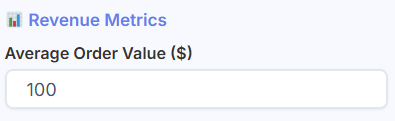
This is the average amount of money a customer spends in a single transaction. To find it, divide your total revenue over a specific period by the number of orders taken during that same period. For example, if you made $10,000 from 200 orders last month, your AOV is $50. A higher AOV directly contributes to a higher CLV.
Annual Purchases
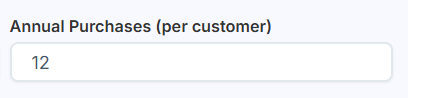
This field asks for the average number of times a customer makes a purchase from your business in a year. For a subscription business, this might be 12 (for a monthly plan) or 1 (for an annual plan). For an e-commerce store, you would look at your data to see how frequently the average customer returns to buy again within a 12-month period.
Profit Margin
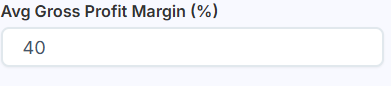
Not all revenue is profit. Your profit margin is the percentage of revenue that is left after all costs of goods sold (COGS) are deducted. For example, if you sell a product for $100 and it costs you $60 to produce and sell, your profit is $40, and your profit margin is 40%. Entering an accurate profit margin ensures the calculator focuses on actual profit, not just revenue.
Customer Lifespan
This is the average length of time a person remains a customer. This can be one of the trickier metrics to determine. For subscription businesses, you can calculate it by dividing 1 by your customer churn rate. If you lose 5% of your customers each month, your churn rate is 0.05, and your average customer lifespan is 20 months (1 / 0.05). For other business models, you may need to analyze historical data to estimate the average duration of a customer relationship.
Cost Metrics Section: The Price of Doing Business
Profitability isn’t just about what you earn; it’s also about what you spend. This section of the calculator accounts for the costs associated with acquiring and keeping customers.
Customer Acquisition Cost (CAC)
This is the total cost of sales and marketing efforts required to acquire a single new customer. To calculate it, sum up all your acquisition-related expenses (ad spend, sales team salaries, etc.) over a period and divide it by the number of new customers you gained in that time. A high CAC can severely eat into your CLV.
Retention Cost
This represents the money you spend to keep an existing customer. These costs include loyalty programs, customer support, email marketing to existing customers, and engagement campaigns. It’s almost always cheaper to retain a customer than acquire a new one, making this an important lever for profitability.
Retention Rate
The retention rate is the percentage of customers who stay with your business over a given period. It’s the opposite of the churn rate. A high retention rate is a strong indicator of customer satisfaction and a healthy business model. It directly extends the customer lifespan and, therefore, the CLV.
Discount Rate
The discount rate is a more advanced but crucial concept for understanding long-term value. Money today is worth more than money in the future due to inflation and investment opportunity cost. The discount rate (typically between 8-15%) is used to calculate the present value of future profits. By applying this rate, the lifetime value of a customer calculator provides a more realistic valuation, accounting for the time value of money. This is especially important for businesses with long customer lifespans, such as in SaaS customer lifetime value calculation.
Growth Metrics Section: Levers for Increasing Value
A customer’s value is not static. It can grow over time through referrals, upsells, and cross-sells. This section helps you quantify that potential growth.
Referral Rate
This is the percentage of your customers who successfully refer new customers to your business. Word-of-mouth is a powerful and cost-effective acquisition channel. Factoring in the value of these referred customers gives you a more complete picture of a happy customer’s total impact.
Upsell & Cross-sell Value
This field captures the average additional annual revenue you generate from an existing customer through upsells (upgrading to a more expensive plan) or cross-sells (buying additional products or services). This is a direct way to increase the “value” part of Customer Lifetime Value without increasing your acquisition costs.
How Growth Affects Lifetime Customer Value
These growth metrics are accelerators for your CLV. A customer who refers others is not just contributing their own purchase value; they are also acting as a marketing channel. A customer who upgrades their subscription or buys complementary products becomes more profitable over time. By modeling this growth, you can better understand the immense value of investing in customer satisfaction and engagement.
CLV Results Section: Understanding the Output
After you have entered all your data, the lifetime value of a customer calculator processes it and presents a dashboard of key metrics. Here’s what each output means for your business.
Total Customer Lifetime Value
This is the headline number: the total net profit you can reasonably expect to earn from an average customer over their entire relationship with your business. It is the ultimate measure of your customer’s worth.
Annual CLV
This breaks down the total CLV into an average annual figure. It helps you understand the yearly profit contribution of a customer, making it useful for annual budgeting and performance reviews.
Also Read : cash-flow-calculator
CLV:CAC Ratio
This crucial ratio compares the total value of a customer (CLV) to the cost of acquiring them (CAC). A healthy ratio is generally considered to be 3:1 or higher, meaning a customer’s value is at least three times the cost to acquire them. A ratio below 1:1 indicates you are losing money on each new customer.
Payback Period
This metric tells you how many months it takes to earn back the money you spent to acquire a customer. A shorter payback period means you become profitable on a new customer faster, which improves your cash flow. This is especially critical for startups and SaaS businesses.
ROI on Acquisition
This shows the total return on investment for your customer acquisition spending. Expressed as a percentage, it clearly demonstrates the profitability of your marketing and sales efforts. A high ROI confirms your growth strategy is working. For example, an ROI of 400% means you get back $4 in profit for every $1 spent on acquisition. This is very different from the returns you might analyze with a Stock Calculator, as it’s directly tied to your operational spending.
Insights & Visualization: Making Data-Driven Decisions
The calculator doesn’t just give you numbers; it helps you visualize them through charts and graphs, turning raw data into actionable insights.
Gross Profit Over Lifetime
A chart showing gross profit over time helps you see how a customer’s value accumulates. You can visualize how long it takes for a customer to become highly profitable, reinforcing the importance of long-term relationships.
Total Investment Cost
This visual breaks down your total investment per customer, showing the initial acquisition cost followed by ongoing retention costs. Comparing this to the gross profit chart puts the cost-benefit analysis in stark relief.
Referral Value
This metric isolates the value generated from referrals, highlighting the financial impact of your happiest customers. Seeing this as a concrete number can justify increased investment in customer experience and referral programs.
Net CLV with Discounting
This chart often compares the simple CLV (without discounting) to the Net Present Value (NPV) of the CLV (with discounting). It illustrates the impact of the time value of money and provides a more conservative, realistic valuation of your customer base.
How Charts Help Decision-Making
Visual charts make complex data instantly understandable. You can see at a glance whether your payback period is too long, if your CLV:CAC ratio is healthy, or where the biggest opportunities for growth lie. This visual feedback loop is essential for making quick, informed, and strategic business decisions.
Use Cases: Putting the Calculator to Work
This lifetime value of a customer calculator is a versatile tool that provides value across different business models.
- SaaS Customer Lifetime Value Calculation: For SaaS businesses, CLV is king. The calculator helps founders determine sustainable CAC, model the impact of churn reduction, and evaluate the profitability of different subscription tiers.
- E-commerce Businesses: E-commerce stores can use the calculator to identify their most valuable customer segments. This insight can inform targeted marketing campaigns, loyalty programs, and decisions on ad spend for different product categories.
- Subscription Models: Whether selling subscription boxes or digital content, these businesses rely on long-term relationships. The calculator helps them understand the financial impact of a 1% improvement in retention rate or the value of upselling customers to an annual plan. It can even help decide pricing for promotions, which could also be planned with a Discount Calculator.
- Marketing Budget Decisions: Ultimately, the CLV calculation empowers marketers to move beyond simple metrics like cost-per-click. By knowing the CLV, they can confidently set budgets, defend their spending, and prove the long-term ROI of their campaigns.
In conclusion, understanding and optimizing for customer lifetime value is no longer optional for a thriving business. By using a lifetime value of a customer calculator, you replace guesswork with data. You gain a clear understanding of your business’s financial health, identify your most valuable customers, and make smarter, more profitable decisions about where to invest your time and money. This simple tool empowers you to build a more sustainable, customer-centric, and ultimately more successful enterprise.
FAQs
What is a good CLV:CAC ratio?
A good ratio of Customer Lifetime Value (CLV) to Customer Acquisition Cost (CAC) is generally considered to be 3:1 or higher. This means for every dollar you spend to acquire a new customer, you expect to generate at least three dollars in profit from them over their lifetime. A ratio below 1:1 indicates you are losing money on each customer, while a ratio significantly higher than 3:1 might suggest you are under-investing in marketing and could be growing faster.
How can I improve my customer lifetime value (CLV)?
Improving CLV involves focusing on long-term customer relationships. Key strategies include:
Increasing customer retention: Reduce churn by improving your product, customer service, and overall customer experience.
Encouraging repeat purchases: Use email marketing, loyalty programs, and personalized offers to bring customers back.
Boosting order value: Implement upselling and cross-selling techniques to increase the amount customers spend per transaction.
Fostering referrals: Create a referral program to encourage happy customers to bring in new business, adding to their overall value.
Why does the “discount rate” matter in a lifetime value of a customer calculator?
The discount rate is important because money you will receive in the future is worth less than money you have today. This is due to factors like inflation and the potential to earn interest if you had the money now. The discount rate adjusts future profits to their present-day value, giving you a more realistic and conservative calculation of CLV. This is especially crucial for businesses with long customer lifespans, such as SaaS or subscription models, as it provides a more accurate picture of long-term profitability.