BMR Calculator
Calculate your Basal Metabolic Rate – the calories you burn at complete rest
Enter Your Details
Your Basal Metabolic Rate (BMR)
—
Mifflin-St Jeor
0
Katch-McArdle
0
Daily Calories Burned (TDEE)
This is your BMR multiplied by your daily activity level.
| Activity Level | Calories / day |
|---|---|
| — | |
Your Ultimate Guide to the BMR Calculator to Calculate Daily Calories Burned at Rest
Understanding your body’s energy needs is the first step toward achieving any health or fitness goal. Whether you aim to lose weight, build muscle, or simply maintain your current physique, knowing how many calories you burn is crucial. This is where a powerful tool comes into play: the BMR Calculator to Calculate Daily Calories Burned at Rest. This guide will walk you through everything you need to know about using this calculator, interpreting your results, and applying them to your personal health journey.
Your Basal Metabolic Rate (BMR) represents the number of calories your body needs to perform its most basic, life-sustaining functions. Think of it as the energy your body would burn if you stayed in bed all day, completely at rest. This includes functions like breathing, circulating blood, regulating body temperature, and cell production. By understanding this baseline number, you can create a more accurate and effective nutrition plan. Using a BMR Calculator to Calculate Daily Calories Burned at Rest removes the guesswork, providing a scientifically-backed starting point for managing your daily calorie needs.
How to Use the BMR Calculator: A Step-by-Step Walkthrough
Using our BMR Calculator to Calculate Daily Calories Burned at Rest is a straightforward process designed for accuracy and ease. Let’s break down each step to ensure you get the most precise reading possible.
Step 1: Select Your Units
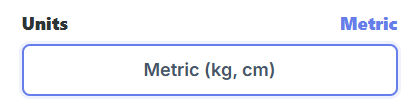
The first step is to choose the measurement system you are most comfortable with. The calculator offers two options:
- Imperial: This system uses pounds (lb) for weight and feet/inches for height.
- Metric: This system uses kilograms (kg) for weight and centimeters (cm) for height.
Select the one that corresponds to the measurements you have. For example, if you know your weight is 150 pounds and your height is 5 feet 9 inches, you would select “Imperial.” If you know your weight is 68 kilograms and your height is 175 centimeters, you would select “Metric.”
Step 2: Input Your Personal Details
Accuracy here is key. The more precise your inputs, the more reliable your results from the BMR Calculator to Calculate Daily Calories Burned at Rest will be.
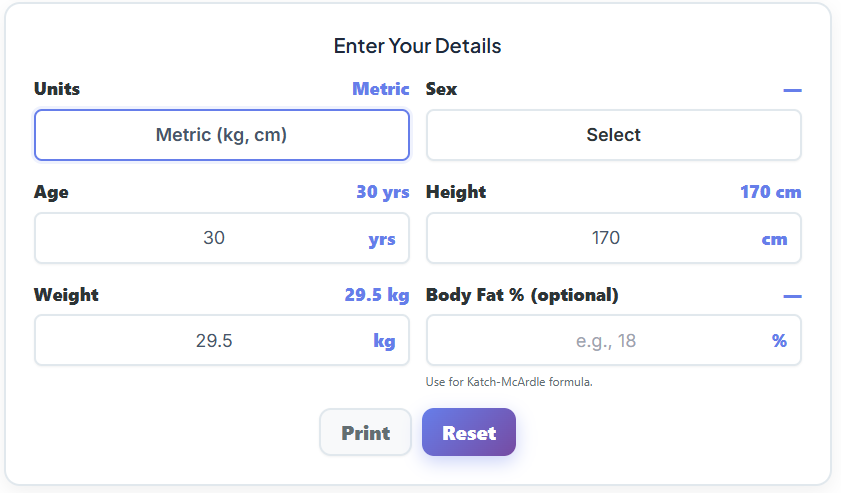
Sex
Select either “Male” or “Female.” This is important because physiological differences, such as body composition and hormonal factors, influence metabolic rate. Men generally have a higher muscle mass and lower body fat percentage than women of the same weight and height, which often results in a higher BMR.
Age
Enter your age in years. Your metabolic rate naturally changes as you get older. It typically peaks during adolescence and gradually declines with age. This decline is often linked to a natural loss of muscle mass, which is a metabolically active tissue. A reliable BMR Calculator to Calculate Daily Calories Burned at Rest accounts for this change.
Weight
Enter your current weight. For the most accurate result, weigh yourself in the morning, after using the restroom, and before eating or drinking anything. Consistency is more important than the specific time of day, so try to weigh yourself under the same conditions each time.
Height
Enter your height. Stand straight against a wall without shoes and have someone mark the top of your head. Then, measure from the floor to the mark. This ensures you have an accurate measurement, which is crucial for the BMR Calculator to Calculate Daily Calories Burned at Rest to function correctly.
Step 3 (Optional): Enter Your Body Fat Percentage
For those who know it, adding your body fat percentage can provide an even more personalized result. This input allows the calculator to use a different, more specific formula.
- Why is this optional? Many people do not know their body fat percentage. It requires special tools like skinfold calipers, bioelectrical impedance scales, or a DEXA scan.
- When should you use it? If you are an athlete, a dedicated fitness enthusiast, or have recently had your body composition analyzed, including this figure will increase the accuracy of your reading.
If you input your body fat percentage, the BMR Calculator to Calculate Daily Calories Burned at Rest will likely use the Katch-McArdle formula, which we will discuss next. If you leave it blank, it will use the Mifflin-St Jeor formula.
Step 4: Calculate and View Your Results
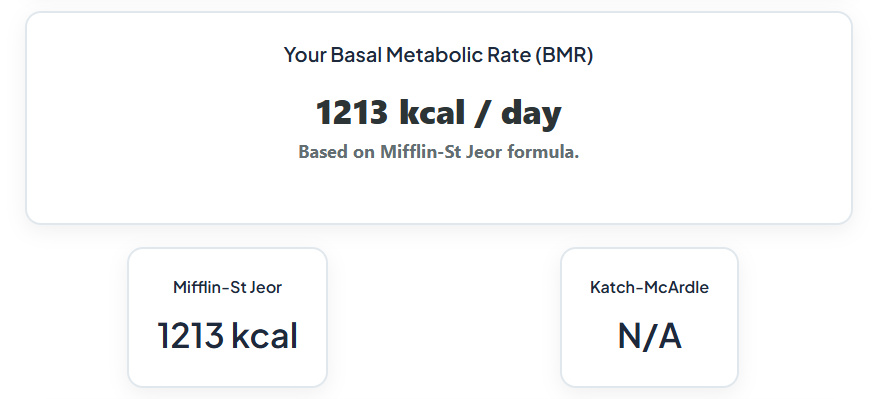
Once all your information is entered, simply click the “Calculate” button. The BMR Calculator to Calculate Daily Calories Burned at Rest will instantly process your data and present you with your results. You will see a number representing your estimated calories burned at rest.
Understanding Your BMR Results: Mifflin-St Jeor vs. Katch-McArdle
Our BMR Calculator to Calculate Daily Calories Burned at Rest utilizes two of the most respected and accurate formulas available. The one used depends on whether you provided your body fat percentage.
The Mifflin-St Jeor Equation: The Standard for Most People
If you did not enter your body fat percentage, your result is calculated using the Mifflin-St Jeor equation. Developed in 1990, it is widely considered the most reliable BMR estimation formula for the general population.
- What it means for you: This result gives you a very strong estimate of your Basal Metabolic Rate based on your sex, age, height, and weight. It’s the perfect starting point for anyone beginning to track their calorie intake.
Let’s consider an example. Sarah is a 35-year-old woman who is 5’6″ (168 cm) tall and weighs 145 lbs (66 kg). She uses the BMR Calculator to Calculate Daily Calories Burned at Rest without entering her body fat percentage. The Mifflin-St Jeor formula might estimate her BMR to be around 1,400 calories per day. This is the energy her body needs just to exist, without any activity.
The Katch-McArdle Equation: The Choice for Body Composition Awareness
If you entered your body fat percentage, your result is calculated using the Katch-McArdle formula. This formula is different because it focuses on your Lean Body Mass (LBM)—everything in your body that isn’t fat, including muscle, bones, organs, and water.
- What it means for you: This formula provides a more customized BMR because it accounts for your unique body composition. Since muscle is more metabolically active than fat, two people with the same total weight but different body fat percentages will have different BMRs. The Katch-McArdle formula captures this difference. This is why it’s a superior choice for athletes and individuals with lower-than-average body fat.
Let’s look at another example. David is a 40-year-old man who is 6’0″ (183 cm) and weighs 200 lbs (91 kg). He has been training consistently and knows his body fat is 15%. When he uses the BMR Calculator to Calculate Daily Calories Burned at Rest and includes this detail, the Katch-McArdle formula might calculate his BMR to be approximately 2,050 calories. This reflects his higher proportion of muscle mass. This level of precision is why a sophisticated BMR Calculator to Calculate Daily Calories Burned at Rest is so valuable.
Interpreting Your BMR: From Baseline to Daily Planning
You’ve used the BMR Calculator to Calculate Daily Calories Burned at Rest and have your number. What now? This number is your foundation, but it’s not the total amount of calories you burn in a day unless you are literally at complete rest.
Your BMR represents the calories burned at rest. It’s the minimum energy required for your body to function. To get a complete picture of your daily energy expenditure, you need to account for your activity level. This is where the concept of Total Daily Energy Expenditure (TDEE) comes in.
Using a precise BMR Calculator to Calculate Daily Calories Burned at Rest is the first, critical step in understanding your metabolism.
Moving from BMR to TDEE: Factoring in Your Activity Level
Your Total Daily Energy Expenditure (TDEE) is the total number of calories you burn in a 24-hour period. It includes your BMR plus the calories burned through physical activity and the thermic effect of food (the energy used to digest and process what you eat).
Our BMR Calculator to Calculate Daily Calories Burned at Rest provides activity multipliers to help you estimate your TDEE. These multipliers are categorized based on your daily lifestyle and exercise habits.
Activity Level Multipliers:
- Sedentary: (Little or no exercise, desk job) – TDEE = BMR x 1.2
- Lightly Active: (Light exercise/sports 1-3 days/week) – TDEE = BMR x 1.375
- Moderately Active: (Moderate exercise/sports 3-5 days/week) – TDEE = BMR x 1.55
- Very Active: (Hard exercise/sports 6-7 days/week) – TDEE = BMR x 1.725
- Extremely Active: (Very hard exercise, physical job, or training twice a day) – TDEE = BMR x 1.9
Let’s go back to Sarah, whose BMR was 1,400 calories. She works a desk job but goes to the gym 3 times a week for a mix of cardio and weight training. She would classify herself as “Lightly Active.”
Her estimated TDEE would be: 1,400 (BMR) x 1.375 (Activity Multiplier) = 1,925 calories per day.
This 1,925 calories is her maintenance level—the amount she needs to eat daily to maintain her current weight. Knowing this figure is essential before making any adjustments for weight loss or gain. For a more detailed breakdown, you can use a dedicated TDEE calculator. Using a BMR Calculator to Calculate Daily Calories Burned at Rest provides the foundational data needed for this next step.
The journey to understanding your daily calorie needs starts with the BMR Calculator to Calculate Daily Calories Burned at Rest. It provides the baseline from which all other calculations are made.
Applying Your Results: Setting Goals for Weight Loss, Gain, or Maintenance
Now for the exciting part: using this data to create an actionable plan. The results from the BMR Calculator to Calculate Daily Calories Burned at Rest, combined with your TDEE, empower you to tailor your nutrition for specific outcomes.
Goal 1: Weight Loss
To lose weight, you need to consume fewer calories than your TDEE. This is known as a calorie deficit. A safe, sustainable, and effective rate of weight loss is typically 1-2 pounds per week.
- How to create a deficit: A deficit of 500 calories per day generally leads to about 1 pound of weight loss per week (500 calories/day x 7 days/week = 3,500 calories/week, which is roughly one pound of fat).
- Sarah’s Weight Loss Plan: Sarah’s maintenance TDEE is 1,925 calories. To lose about one pound per week, she could aim for a daily intake of around 1,425 calories (1,925 – 500).
It’s important not to drop your calorie intake below your BMR for extended periods without professional guidance, as this can negatively impact your metabolism and overall health. The results from the BMR Calculator to Calculate Daily Calories Burned at Rest give you a clear floor for your intake. For more help with this, a calorie deficit calculator can provide structured guidance on creating a safe and effective plan.
Using the BMR Calculator to Calculate Daily Calories Burned at Rest ensures you don’t set your calorie target too low, protecting your metabolic health while pursuing weight loss.
Goal 2: Weight Gain (Muscle Building)
To gain weight, primarily in the form of muscle, you need to be in a calorie surplus. This means consuming more calories than your TDEE. This surplus provides the energy your body needs to repair and build new muscle tissue after resistance training.
- How to create a surplus: A modest surplus of 250-500 calories per day is recommended. This helps ensure that the majority of the weight gained is lean mass, not excess fat.
- David’s Muscle Gain Plan: David’s BMR was 2,050, and let’s say he is “Moderately Active,” making his TDEE roughly 3,177 calories (2,050 x 1.55). To build muscle, he could aim for a daily intake of 3,427 to 3,677 calories.
Pairing this calorie surplus with a consistent strength training program is essential for muscle growth. The BMR Calculator to Calculate Daily Calories Burned at Rest is just as crucial for gaining weight effectively as it is for losing it. Knowing your Basal Metabolic Rate helps you establish a solid nutritional foundation. When planning your meals for muscle gain, paying attention to macronutrients (protein, carbs, and fats) is also key. A macro calculator can help you determine the optimal ratio for your goals. The initial data from a BMR Calculator to Calculate Daily Calories Burned at Rest is a great starting point.
Goal 3: Weight Maintenance
If your goal is to maintain your current weight, your objective is simple: consume a number of calories that is roughly equal to your TDEE.
- How to maintain: Your TDEE is your target. Using Sarah’s example, she would aim to eat around 1,925 calories per day to stay at her current weight.
- Flexibility and Adjustment: Your TDEE isn’t static. If you have a particularly active week, your energy needs will be higher. If you are less active, they will be lower. It’s helpful to think of your TDEE as a weekly average. The BMR Calculator to Calculate Daily Calories Burned at Rest gives you a stable baseline, making it easier to adjust for daily fluctuations.
Using the BMR Calculator to Calculate Daily Calories Burned at Rest regularly can help you stay on track, especially if your activity levels, age, or weight change over time.
Practical Tips for Optimizing Your Daily Calorie Intake
Knowing your numbers is one thing; applying them consistently is another. Here are some experience-based tips to help you succeed.
- Be Honest with Your Activity Level: One of the most common mistakes is overestimating activity level. Be realistic. A one-hour gym session doesn’t necessarily make you “very active” if the other 23 hours are spent sitting. This honesty will make your TDEE calculation, based on the data from the BMR Calculator to Calculate Daily Calories Burned at Rest, much more accurate.
- Track Your Intake: In the beginning, tracking your food and drink intake using an app can be incredibly insightful. It shows you exactly where your calories are coming from and helps you align your consumption with the targets you set using the BMR Calculator to Calculate Daily Calories Burned at Rest.
- Prioritize Nutrient-Dense Foods: Whether you’re in a deficit, surplus, or at maintenance, focus on whole, unprocessed foods. Lean proteins, complex carbohydrates, healthy fats, fruits, and vegetables provide essential micronutrients and help with satiety, energy levels, and overall health.
- Listen to Your Body: Calorie targets are guidelines, not rigid rules. Some days you will be hungrier than others. Pay attention to your energy levels, mood, and sleep quality. If you are consistently feeling sluggish or excessively hungry, you may need to adjust your intake. The BMR Calculator to Calculate Daily Calories Burned at Rest provides a scientific starting point, but your personal experience provides ongoing feedback.
- Re-calculate Periodically: Your BMR and TDEE will change as your weight, age, and body composition change. It’s a good practice to re-run your numbers through the BMR Calculator to Calculate Daily Calories Burned at Rest every few months or after a significant change in weight (e.g., losing or gaining 10-15 pounds). This ensures your targets remain relevant to your current body.
The BMR Calculator to Calculate Daily Calories Burned at Rest is an indispensable tool for anyone serious about their health. It demystifies one of the most fundamental aspects of nutrition: energy balance. By providing you with a clear estimate of your calories burned at rest, it empowers you to move forward with a plan that is tailored specifically to you.
By following this guide, you can confidently use the BMR Calculator to Calculate Daily Calories Burned at Rest, interpret the results accurately, and apply them to achieve your personal health and fitness goals. Your journey starts with a single number, and this powerful tool helps you find it. Take control of your nutrition today by discovering your unique metabolic starting line with the BMR Calculator to Calculate Daily Calories Burned at Rest. This foundational knowledge, derived from the BMR Calculator to Calculate Daily Calories Burned at Rest, is the key to unlocking sustainable, long-term results.
FAQs
Why is my BMR number so much lower than the calories I think I burn daily?
Your BMR, or Basal Metabolic Rate, represents the number of calories your body burns at complete rest—think of it as the energy needed just to keep your body running if you were in bed all day. It does not include calories burned from any physical activity, from walking around to intense exercise. To get a full picture of your daily calorie needs, you need to multiply your BMR by an activity factor to find your Total Daily Energy Expenditure (TDEE). The number you get from the BMR Calculator to Calculate Daily Calories Burned at Rest is your baseline, not your total daily burn.
How often should I use the BMR Calculator to Calculate Daily Calories Burned at Rest?
It’s a good idea to recalculate your BMR whenever you experience a significant change in your body. We recommend using the BMR Calculator to Calculate Daily Calories Burned at Rest every few months or after:
Losing or gaining 10-15 pounds or more.
A significant change in your body composition (e.g., gaining noticeable muscle or losing fat).
A major shift in your regular physical activity level.
Since your weight, age, and composition affect your BMR, keeping it updated ensures your calorie targets remain accurate for your goals.
Which formula is better: Mifflin-St Jeor or Katch-McArdle?
Neither formula is “better,” but one may be more appropriate for you.
Mifflin-St Jeor is the most widely used and recommended formula for the general population. It provides a highly accurate estimate using your age, sex, height, and weight.
Katch-McArdle is more specialized. It’s ideal if you know your body fat percentage, as it bases its calculation on your lean body mass. This makes it particularly accurate for athletes and individuals with a body composition that differs significantly from the average person.
Our BMR Calculator to Calculate Daily Calories Burned at Rest automatically uses the best formula based on the information you provide.