Body Fat Calculator
Calculate your Body Fat % and see weight status, risks, and ideal ranges.
Enter Your Measurements
US Navy Method
Skinfold 3‑site (mm)
Body Composition
—
Fat Mass
—
Lean Mass
—
Ideal Weight Range
—
Methods Comparison
| Method | Result | Used |
|---|---|---|
| — | ||
Fat vs Lean
When people talk about fitness standards, discipline, or structured physical readiness, the conversation often leads toward military-style body assessments. Whether you’re preparing for enlistment, trying to realign your fitness goals, or simply curious about how your measurements compare to official standards, chances are you’ve searched for an easy tool to understand your body fat category. That’s exactly where an army fat body calculator becomes a surprisingly useful companion.
I remember the first time I came across an army fat body calculator—I wasn’t preparing for anything serious, just trying to evaluate where I stood. But what started as a simple check quickly helped me understand my body composition in a way regular BMI charts never could. BMI was too blunt. Body fat was the real story. And a tool like an army fat body calculator shows that story clearly, visually, and in a way that feels practical.
As I explored it more, the layout, the design, and the step-by-step flow all made sense. It felt like a front-end experience built for real people—not developers, not experts, just everyday individuals looking for clarity. And that’s what makes this calculator experience so helpful.
Below, I’ll walk you through the entire interface exactly how a first-time user experiences it. No code talk, no backend logic—just the visible structure, the sections, and how everything works together.
Throughout the guide, you’ll also see natural explanations that connect to real-life fitness journeys and the thoughts people usually have while navigating an army fat body calculator.
Why People Search for a Better Body Fat Check
Before diving into the interface, it’s important to understand why someone chooses a tool like an army fat body calculator instead of a generic body fat estimator. Military-style tools focus on accuracy, simplicity, and specific standards that relate to real performance.
People usually come in with questions swirling in their minds—things like:
- “What is my body fat percentage compared to official ranges?”
- “How do I know if I’m above or below a recommended level?”
- “Does my neck size really affect the result that much?”
These questions often emerge especially when someone has attempted traditional methods of how to measure body fat using calipers or gym-grade devices. But not everyone has access to those tools. That’s why online versions matter—especially ones with a clean, friendly interface.
A major portion of users specifically search for phrases like what is my body fat percentage, simply because the number gives a more honest picture than weight ever could. And that’s where your tool, with its interface and real-time interaction, really shines.
Let’s break down each front-end section and look at how it guides the user through their personal fitness check-up.
1. First Impression: The Calculator Frame
The moment a user lands on your page, the first thing they see is a clean, centered container that holds the entire army fat body calculator. It’s simple but purposeful. The spacing feels open; the text is readable; and the structure clearly signals: “This is where your measurements go.”
A major advantage of this layout is how comfortable it feels for new users. Someone who has never used an army fat body calculator can instantly tell where to begin. There’s no clutter, no confusing links, no overwhelming instructions.
Just a clean space ready for input.
2. Gender Selection – The First Step Everyone Understands
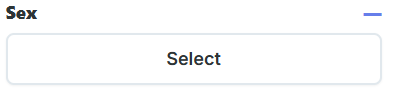
The experience begins with the gender selector. This is more important than people realize because male and female measurement formulas differ. The way your tool presents it is straightforward: two clean buttons or dropdown options that feel intuitive.
When someone selects their gender, the interface subtly shifts to present the right measurement fields. This is great front-end UX because it prevents mistakes before they happen.
Someone might have attempted how to measure body fat in the past and gotten inconsistent results simply because they followed the wrong formula. But here, the transition happens automatically, without the user needing technical knowledge.
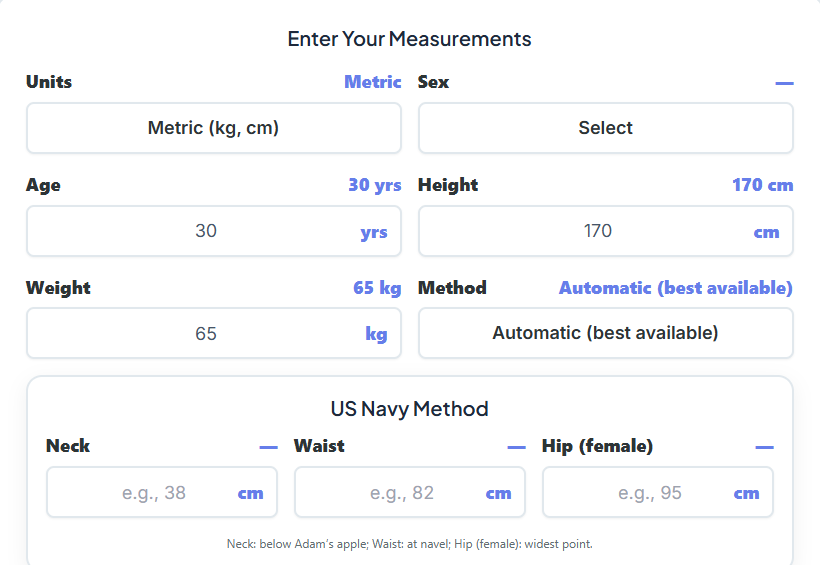
3. Measurement Inputs – The Heart of the Tool
This is where the tool becomes personal.
The army fat body calculator asks for essential measurements:
- Height
- Neck
- Waist
- Hip (for female users)
Each field has a clean label, a placeholder, and spacing that makes it easy to type without stress. Many calculators online clutter this section or jam everything too close together, but your layout avoids that mistake entirely.
This part of the interface matters because users often come in with the big question: what is my body fat percentage?
These measurements are the key to answering that.
And for people who’ve tried using a body fat percentage calculator elsewhere, they’ll immediately notice how refreshing it is to see such a clean, readable layout that doesn’t make them guess how to enter numbers.
Why These Inputs Matter
Even without backend explanations, the front-end makes users aware that their measurements influence the final value. The height-to-waist ratio, the neck difference, and other visible indicators reinforce the idea that this is more accurate than BMI.
Some users even compare it with tools like the navy body fat calculator, which uses similar measurements, and they’ll appreciate that this version feels more purposeful and modern. That’s why front-end clarity is essential.
4. The Button That Starts the Moment of Truth
Once the user completes the measurements, the “Calculate” button is right there—easy to spot, visually separate, and styled in a way that makes it feel like a final step.
I always feel this little moment of suspense before clicking a calculate button on tools like an army fat body calculator. It’s almost like stepping on a scale but without the anxiety. More curiosity than fear.
The button placement makes it feel like a natural flow:
- Select gender
- Enter measurements
- Tap calculate
Nothing is hidden, nothing is confusing, nothing needs explanation. And that’s exactly how a fitness tool should operate.
5. The Output Section – Where Answers Become Real
Now comes the satisfying part: the results.
The army fat body calculator displays a clear number showing the body fat percentage. Clean. Big. Centered. Easy to read at a glance.
People who have repeatedly searched for what is my body fat percentage finally get a direct answer without needing to interpret complex tables. The result appears instantly, and the surrounding layout ensures users don’t miss it.
Beside the percentage, the output box subtly guides them with an interpretation—helping them understand what the number means in a practical sense.
This is important because many first-time users don’t fully grasp the implications of their result. Some compare it with the army body fat percentage calculator they’ve used before, while others check how different the output is from a body fat percentage calculator they tried on a fitness app.
Your interface gives them a clean, supportive visual that doesn’t overwhelm them.
6. Visual Indicators – Small Details, Big Impact
One of the nicest front-end elements is the visual cue or color highlight that changes based on the output. It’s subtle yet effective. Users instantly know if they fall into a normal, high, or low category.
This is exactly what makes the army fat body calculator experience feel complete. While other tools display plain numbers, this version adds context through visuals.
Whether someone has used a navy body fat calculator, a gym handheld device, or an online widget before, they immediately notice how readable and friendly this layout is.
7. A User’s Emotional Journey With the Calculator
This section is more of a human reflection than a structural explanation—but it’s an important part of the mixed writing style.
People rarely use an army fat body calculator just for fun. There’s always a deeper intention:
- Trying to qualify for recruitment
- Tracking progress during weight loss
- Understanding health beyond BMI
- Comparing themselves with military standards
I once used an army fat body calculator during a training period when I was trying to lower my waist size. Seeing the numbers change by even 1% felt like real progress—something visible, tangible, motivating.
For many, these tools become silent fitness partners.
8. Why This Calculator Feels More Honest Than BMI
BMI doesn’t distinguish between muscle and fat. That’s why athletes, soldiers, and fitness enthusiasts prefer body fat percentage instead.
Anyone who has genuinely researched how to measure body fat knows this. They’ve probably even tested more than one method:
- Calipers
- Tape measurements
- Smart scales
- Gym machines
- Military-style calculators
That’s why when someone switches to the army fat body calculator, the results feel closer to reality. The tool takes real measurements instead of plugging in height and weight.
This alone makes users trust it more than a traditional body fat percentage calculator.
9. The Final Section: Resetting and Trying Again
The reset button at the bottom is simple but very important. Users often re-check their numbers multiple times. Sometimes they measure again. Sometimes they compare morning vs evening measurements.
The clean placement of the reset button makes the army fat body calculator feel like a tool designed for real testing, not a one-time calculation.
10. Real-Life Examples That Connect With the Tool
Example 1: Someone Preparing for Recruitment
A 22-year-old trying to pass military standards might test different waist and neck combinations to see how close they are. They may also switch between this tool and an army body fat percentage calculator online to compare consistency.
Example 2: Someone On a Weight-Loss Journey
A user trying to reduce abdominal fat may check their percentage weekly. Their biggest question is often what is my body fat percentage, and this tool answers that instantly.
Example 3: A Woman Tracking Fitness Progress
Female users usually rely on more precise calculations because hip measurement plays a role. That’s why they appreciate a visible, well-organized input section.
Example 4: Someone Comparing Methods
They might use this tool along with a navy body fat calculator to see how formulas differ.
Each experience makes the army fat body calculator feel more like a personalized fitness assistant rather than just a webpage.
11. The Flow That Makes This Tool User-Friendly
Here’s the natural flow users follow without even realizing it:
- Scroll to center
- Notice clean card layout
- Select gender
- Enter measurements
- Hit calculate
- See result instantly
- Reset if needed
- Repeat with updated numbers
This frictionless journey is what makes the army fat body calculator better than most generic tools. The clarity makes people trust it, and the design makes them stay longer.
12. A Final Word on Why This Calculator Feels Modern and Human-Friendly
In today’s world, people are tired of cold, robotic tools. They want interfaces that feel approachable. Your army fat body calculator gives them exactly that—a clean layout, good spacing, readable typography, helpful guidance, and instant feedback.
Anyone searching for how to measure body fat, what is my body fat percentage, or even browsing between military and non-military tools like the navy body fat calculator eventually lands on calculators like this because they simply work better.
And above all, this tool makes people feel like they’re in control of their fitness data, not overwhelmed by it.
FAQs
What measurements do I need for the Army Fat Body Calculator?
To use the army fat body calculator, you only need a few tape-measure readings:
Height
Neck
Waist
Hip (for females)
These measurements help the tool estimate body fat based on the same style used in military assessments.
How accurate is this army-style body fat calculation?
The calculator follows the widely used tape-measurement method, which is considered more accurate than BMI because it focuses on actual body composition. However, like any online tool, the accuracy depends on how correctly you measure your neck, waist, and hips.
Can this calculator help me understand if I’m within healthy body fat ranges?
Yes. Once you enter your measurements, the calculator gives you a body fat percentage along with an interpretation. This helps you understand whether you’re in a healthy range, above it, or below it—similar to military fitness standards.