Convert the Following Temperature to Celsius Scale 573 K
Introduction
Temperature conversion is a fundamental skill in science, engineering, and everyday life, bridging the gap between theoretical physics and practical application. When students or professionals encounter a problem asking them to convert the following temperature to celsius scale 573 k, they are often dealing with high-heat scenarios relevant to industrial processes or advanced scientific experiments. The ability to switch seamlessly between Kelvin, the language of thermodynamics, and Celsius, the language of daily weather and standard laboratory measurements, is crucial for accuracy and safety. Our digital world offers tools that make these calculations instant, removing the potential for human error that often plagues manual arithmetic.
For many, the prompt to convert the following temperature to celsius scale 573 k appears in chemistry textbooks, physics exams, or engineering manuals where precise thermal management is required. Understanding the relationship between these scales allows for better comprehension of how heat energy behaves in different environments. Whether you are a student trying to visualize how hot 573 Kelvin actually is, or a researcher needing to log data in a specific format, having a reliable method to perform this conversion is indispensable. The Celsius scale provides a relatable reference point—we know what water feels like at 100°C—whereas Kelvin often feels abstract until converted.
In this comprehensive guide, we will explore the nuances of temperature scales, the specific steps to convert the following temperature to celsius scale 573 k using our intuitive tool, and the broader context of why these conversions matter. By the end of this article, you will not only have the answer to the specific conversion of 573 K, but you will also possess a deep understanding of the underlying concepts that make temperature such a vital variable in our universe. We will walk through the tool’s usage, explore real-world applications, and ensure you never struggle with these conversions again.
What Is Temperature (Simple Explanation)
Temperature is more than just a measure of how hot or cold an object feels to the touch; it is a quantitative measurement of the average kinetic energy of the particles in a substance. When you need to convert the following temperature to celsius scale 573 k, you are essentially translating a specific energy state into a different numerical language. Every atom and molecule in the universe is in constant motion, vibrating or moving through space. The faster these particles move, the higher the temperature. This microscopic activity manifests as the heat we feel or the thermal readings we see on a thermometer. It is a fundamental property of matter that dictates phase changes, chemical reaction rates, and physical expansion.
In scientific contexts, temperature is an intensive property, meaning it does not depend on the amount of substance present. A cup of boiling water has the same temperature as a large pot of boiling water, even though the pot contains more total heat energy. Understanding this distinction is vital when you look to convert the following temperature to celsius scale 573 k because it helps frame the result correctly. You are defining the intensity of heat, not the total thermal capacity. This concept is foundational in fields ranging from meteorology to culinary arts, where precise temperature control determines the outcome of weather patterns or a perfectly cooked meal.
Furthermore, temperature dictates the direction of heat flow. Heat naturally flows from a body of higher temperature to one of lower temperature until thermal equilibrium is reached. When engineers calculate thermal gradients, they often need to convert the following temperature to celsius scale 573 k to ensure that materials can withstand the heat transfer occurring within a system. Whether it is measuring the fever of a patient or the operating temperature of a car engine, the concept remains the same: we are quantifying molecular agitation to predict physical behavior and ensure safety in our environment.
Understanding the Celsius Scale
The Celsius scale, originally known as the Centigrade scale, is perhaps the most widely used temperature system globally for general scientific and day-to-day applications. It was designed around the properties of water, making it incredibly intuitive for human use. The scale is defined by two fixed points: 0°C represents the freezing point of water, and 100°C represents the boiling point of water at standard atmospheric pressure. This 100-degree interval makes calculations straightforward and relatable. When you convert the following temperature to celsius scale 573 k, you are mapping a value onto this water-centric scale, which helps visualize the intensity of the heat in terms of boiling water multiples.
Anders Celsius, the Swedish astronomer who proposed the scale in 1742, created a system that has stood the test of time because of its practicality. In the Celsius system, negative numbers indicate temperatures below freezing, while positive numbers indicate temperatures above it. This clear demarcation is why the scale is preferred in meteorology, medicine, and most non-engineering industries. When a user inputs a query to convert the following temperature to celsius scale 573 k, they are looking for a result that makes sense in this familiar context. Seeing a high Celsius value immediately alerts a technician or student that the substance is significantly hotter than boiling water, requiring safety precautions.
The Celsius scale also serves as a bridge to the Kelvin scale. Since the magnitude of one degree Celsius is exactly the same as one unit Kelvin, the relationship is linear and direct. This equivalence in interval size simplifies the math significantly. However, because the zero points differ, a conversion is always necessary. Understanding the structure of the Celsius scale is the first step in mastering these conversions. It provides the necessary context to interpret the result when you convert the following temperature to celsius scale 573 k, ensuring that the number you see corresponds to a physical reality you can understand and work with safely.
What Is Kelvin and Why It’s Used
The Kelvin scale is the primary unit of temperature measurement in the physical sciences, widely used in physics and chemistry because it is an absolute scale. Unlike Celsius or Fahrenheit, which have arbitrary zero points based on water or brine, the Kelvin scale starts at absolute zero. Absolute zero, or 0 K, is the theoretical point where all thermal motion of particles ceases. Because there are no negative numbers in the Kelvin scale, it simplifies algebraic equations used in thermodynamics. When scientists ask to convert the following temperature to celsius scale 573 k, they are often taking a raw thermodynamic data point and translating it for reporting or practical implementation.
Named after Lord Kelvin (William Thomson), who emphasized the need for an absolute thermometric scale, Kelvin is crucial for calculations involving gas laws. For instance, in the Ideal Gas Law (PV=nRT), temperature must always be in Kelvin to avoid mathematical errors that would arise from multiplying by zero or negative numbers found in the Celsius scale. This absolute nature makes Kelvin the standard for measuring extreme environments, from the cold of deep space to the heat of a star’s core. Consequently, finding the need to convert the following temperature to celsius scale 573 k is common when transitioning from theoretical calculations to practical engineering limits where materials are rated in Celsius.
Despite its scientific superiority for calculations, Kelvin is rarely used in daily life because the numbers are cumbersome for typical weather or cooking temperatures. Room temperature is roughly 293 K, a number that doesn’t hold intuitive meaning for most people. This disconnect is exactly why conversion tools are so popular. We need the mathematical purity of Kelvin for the science, but we need the relatability of Celsius for the human element. Therefore, the ability to quickly convert the following temperature to celsius scale 573 k bridges the gap between the rigorous demands of scientific laws and the practical needs of human understanding and equipment calibration.
Why People Convert Kelvin to Celsius
The primary reason people convert Kelvin to Celsius is relatability and equipment standardization. Most thermometers, climate control systems, and industrial sensors used in manufacturing are calibrated to read in Celsius. While a physicist might calculate the required energy state in Kelvin, the technician monitoring the machine sees a display in degrees Celsius. To set the machine correctly, one must convert the following temperature to celsius scale 573 k. This translation is a critical step in operational workflows, ensuring that the theoretical requirements match the physical settings of the hardware being used.
Another significant reason is safety and communication. In a laboratory setting, telling a colleague that a solution is at 573 Kelvin might require them to do mental math to understand the danger level. However, stating the Celsius equivalent immediately conveys that the substance is extremely hot—well above the boiling point of water and likely hot enough to ignite certain materials or cause severe burns. When you convert the following temperature to celsius scale 573 k, you are effectively translating data into a safety warning. It allows for quicker decision-making and risk assessment, which is vital in high-pressure environments like chemical plants or research facilities.
Education plays a huge role as well. Students are frequently tasked to convert the following temperature to celsius scale 573 k to demonstrate their understanding of thermal physics. It is a classic problem that tests a student’s grasp of the relationship between absolute temperature and the relative Celsius scale. By performing these conversions, students learn to appreciate the “shifting” of the zero point between the scales. Furthermore, in fields like materials science, properties like melting points are often listed in Celsius in reference tables, even if the experimental data is collected in Kelvin. Converting is necessary to cross-reference findings with established literature.
How This Temperature Converter Tool Works
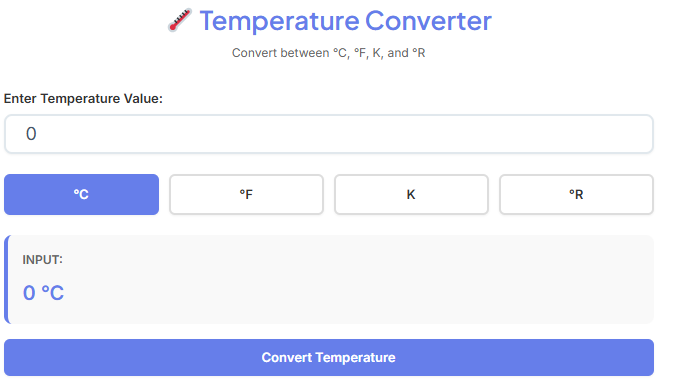
Our temperature converter tool is designed with user simplicity at its core, removing the need for manual calculation and reducing the risk of arithmetic errors. When you need to convert the following temperature to celsius scale 573 k, the tool provides a streamlined interface that guides you through the process effortlessly. The user experience begins with a clean, uncluttered input field designated for the temperature value. You simply type the number you wish to convert—in this case, 573—into the box. The tool is built to handle various numeric formats, ensuring that whether you paste a value or type it manually, the system recognizes the input immediately.
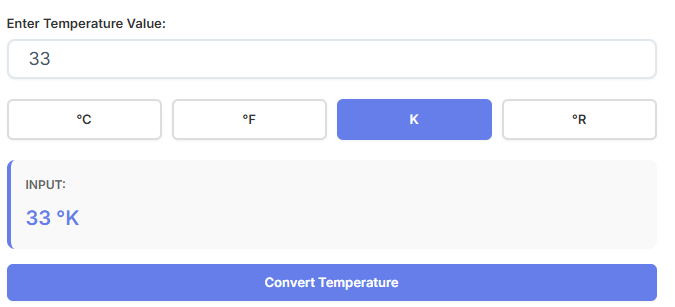
Once the numerical value is entered, the next step in the flow involves selecting your units. A clearly labeled dropdown menu allows you to specify the “From” unit. Here, you would select “Kelvin (K)” from the list of available temperature scales. Simultaneously, or immediately after, you select the “To” unit in the adjacent dropdown menu. To convert the following temperature to celsius scale 573 k, you would choose “Celsius (°C)” as your destination unit. This two-step selection process is intuitive, mirroring the logical flow of asking a question: “I have Kelvin, and I want Celsius.” The design ensures that even users unfamiliar with technology can navigate the selection without confusion.
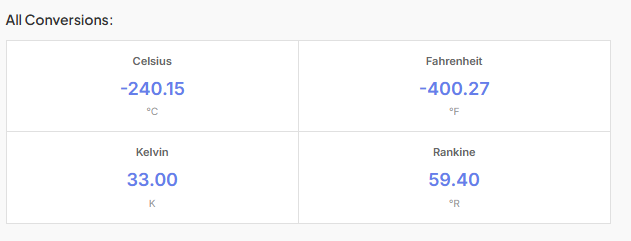
After the value and units are selected, the conversion happens instantly. There is no need to press a “calculate” button or wait for a page reload. The tool utilizes real-time processing to display the result immediately in the output field. You will see the converted value displayed prominently, formatted for easy reading. This instant feedback loop is perfect for users who need to convert the following temperature to celsius scale 573 k multiple times or who are comparing various data points rapidly. The tool also often displays the result in other scales simultaneously, such as Fahrenheit or Rankine, providing a comprehensive overview of the temperature value across all major scientific standards.
Converting 573 K to Celsius Using the Tool
When you specifically use our tool to convert the following temperature to celsius scale 573 k, the process is incredibly satisfying due to the speed and accuracy of the result. You start by entering “573” into the main input box. As soon as you confirm that your input unit is Kelvin and your output unit is Celsius, the screen reflects the precise conversion. This eliminates the uncertainty that comes with mental math, especially when dealing with the specific decimal offset that defines the relationship between these two scales. The tool handles the subtraction of the absolute zero offset in the background, presenting you with the final, usable Celsius figure.
Users often come to the tool with variations of similar queries, such as needing to convert 300k to c or looking for 300 k to celsius conversions alongside their primary task. Our tool is versatile enough to handle these rapid-fire changes. If you have just finished the task to convert the following temperature to celsius scale 573 k and suddenly need to check 300k to celsius, you don’t need to refresh the page. You simply highlight the “573,” type “300,” and the result updates instantly. This flexibility makes it an essential utility for students working through a long list of homework problems or engineers verifying a range of operating temperatures.
The display of the result when you convert the following temperature to celsius scale 573 k is designed to be crystal clear. The output often includes the unit symbol (°C) to prevent any ambiguity. This is particularly helpful when you are multitasking or transcribing data into a lab notebook. You might also see related conversions pop up; for instance, if you were curious about 300k to c, you’d see that result in the history or sidebar if the tool supports it. The goal is to provide a friction-less experience where the intent to convert the following temperature to celsius scale 573 k is met with an immediate, accurate, and easy-to-read solution that integrates seamlessly into your workflow.
Real-Life Uses of Celsius Conversions
The necessity to convert the following temperature to celsius scale 573 k often arises in industrial manufacturing, specifically in processes like annealing and tempering of metals. Metalworking requires precise thermal control to alter the physical properties of materials. 573 Kelvin is a significant temperature range for certain heat treatments. If a furnace controller is set in Celsius, the operator must convert the Kelvin specification from the engineering diagram to Celsius to ensure the furnace is programmed correctly. A mistake here could lead to brittle metal or structural failure, highlighting the critical nature of accurate conversion.
In the field of meteorology and environmental science, while atmospheric temperatures rarely reach 573 K, the principles of conversion remain vital. However, in volcanology or geothermal studies, scientists frequently encounter extreme heat. When analyzing lava flows or thermal vents, data might be collected by remote sensors in Kelvin. To communicate the danger levels to local authorities or the public, scientists convert the following temperature to celsius scale 573 k. This helps in creating understandable safety zones and evacuation plans, as the public understands “300 degrees Celsius” much better than its Kelvin equivalent.
Another prominent area is in the culinary and food safety industry, specifically in advanced food processing techniques like pasteurization or sterilization of equipment. While food isn’t cooked at 573 K, industrial ovens for cleaning and sterilization often operate at very high temperatures. Maintenance logs and safety protocols are strictly kept in Celsius. Therefore, if a machine’s technical manual lists a maximum operating limit in Kelvin, the safety officer must convert the following temperature to celsius scale 573 k to set the high-limit alarms correctly. This ensures that the equipment does not overheat, protecting both the facility and the employees working the line.
Understanding the Conversion Results
Once you successfully convert the following temperature to celsius scale 573 k, interpreting the result is the next logical step. The resulting Celsius value represents a temperature that is significantly high—hot enough to melt lead and char wood instantly. Understanding this magnitude is crucial for context. It is not merely a number; it represents a physical state of high energy. In a laboratory, this result tells you that standard glassware might be at its limit, or that specialized heat-resistant gloves are insufficient protection. The number derived when you convert the following temperature to celsius scale 573 k serves as a direct indicator of the environmental conditions you are dealing with.
Furthermore, interpreting results accurately is vital when using other conversion tools in tandem. For instance, if you are working with liquids at this temperature, you might use a Volume Converter to check expansion. Liquids expand as they heat up, and knowing the precise temperature allows you to predict how much more space a liquid will occupy inside a container. If you convert the following temperature to celsius scale 573 k and find it exceeds the boiling point of the liquid, the volume calculation changes entirely from liquid expansion to gas expansion, which is a critical distinction for safety.
Similarly, the result is essential for energy management. After you convert the following temperature to celsius scale 573 k, you might input this temperature data into an Energy Converter. This is because the specific heat capacity and energy required to maintain a system at this temperature are immense. Understanding the Celsius value helps in calculating the kilowatts or joules needed to sustain the process. Additionally, for construction or machinery design, an Area Converter is often referenced alongside temperature data. Materials expand across their surface area when heated. Knowing the exact Celsius temperature helps engineers calculate thermal expansion to prevent buckling or cracking in structural components.
Celsius vs Kelvin (Conceptual Difference)
The conceptual difference between Celsius and Kelvin lies in their starting points, or “zeros.” As we discussed, zero degrees Celsius is the freezing point of water, a tangible, earthly reference. Zero Kelvin, however, is absolute zero, the point of zero thermal energy. When you convert the following temperature to celsius scale 573 k, you are essentially adjusting for this difference in starting blocks. The Kelvin scale is a “thermodynamic” scale, meaning it relates directly to energy. Celsius is an “interval” scale, designed for convenience relative to water. This fundamental difference dictates why we use one for math and the other for measurement.
Another key conceptual difference is the presence of negative numbers. The Kelvin scale creates a framework where negative temperatures are impossible (in classical thermodynamics), which simplifies the laws of physics. Celsius, however, embraces negatives to describe common winter weather or cryogenic freezing. When you convert the following temperature to celsius scale 573 k, you will always get a positive Celsius number because 573 K is well above the “absolute zero offset” of 273.15. However, if you were converting a low Kelvin value, you might end up with a negative Celsius result, illustrating the different conceptual frameworks the two scales occupy.
Despite these differences, they share the same “resolution” or degree size. A change of 1 Kelvin is physically identical to a change of 1 degree Celsius. This is why the conversion is a simple linear shift rather than a complex multiplication. When you convert the following temperature to celsius scale 573 k, you are preserving the precision of the measurement while simply translating the baseline. Recognizing that the “steps” on the ladder are the same size, but the ladder itself is placed at a different height, helps users conceptually grasp what the tool is doing during the conversion process.
Also Read more : https:weight-converter
Common Mistakes When Converting Temperature Units
One of the most common mistakes users make when they try to convert the following temperature to celsius scale 573 k is confusing the offset value. Many people remember the number 273, but forget the decimal .15. While for rough estimates 273 is acceptable, scientific precision requires using 273.15. Leaving off the decimal can lead to cumulative errors in large datasets. Our tool automatically accounts for this precise figure, ensuring that when you convert the following temperature to celsius scale 573 k, the result is scientifically accurate down to the decimal point, preventing these manual rounding errors.
Another frequent error is applying the wrong operation. Users attempting mental math sometimes add 273.15 instead of subtracting it when going from Kelvin to Celsius. This fundamental arithmetic error results in a widely incorrect temperature, potentially suggesting a system is much hotter than it actually is. By using an automated tool to convert the following temperature to celsius scale 573 k, you eliminate the possibility of mixing up addition and subtraction. The tool’s logic is hard-coded to perform the correct subtraction every time, safeguarding against simple human slips that can have expensive or dangerous consequences.
Finally, users often confuse the scales themselves, mistaking Fahrenheit for Celsius or Rankine for Kelvin. Entering data into the wrong field is a classic user error. For example, a user might intend to convert convert the following temperature to celsius but accidentally selects Fahrenheit as the output. This results in a number that looks plausible but is physically incorrect. When you prepare to convert the following temperature to celsius scale 573 k, always double-check the dropdown menus. Our tool helps mitigate this by clearly labeling units and often showing multiple conversions at once, so you can spot if a number looks “off” compared to what you expected for a Celsius value.
Who Uses Temperature Conversion Tools
A wide array of professionals and students rely on tools to convert the following temperature to celsius scale 573 k. Students and Educators are the most frequent users. From middle school general science to university-level thermodynamics, the curriculum is packed with conversion problems. Teachers use these tools to generate answer keys, while students use them to check their homework. The specific query to convert the following temperature to celsius scale 573 k often appears in standardized tests and textbooks, making these users a core audience for conversion utilities.
Scientists and Researchers in chemistry and physics laboratories are also heavy users. They constantly record data from instruments that may output in Kelvin, yet they must publish papers or set safety protocols in Celsius. Whether they are synthesizing new compounds or studying material properties at high heat, they need to convert the following temperature to celsius scale 573 k accurately to ensure their experimental conditions are reproducible. A slight error in temperature conversion can ruin an experiment or invalidate a research paper, so they rely on digital tools for absolute precision.
Engineers and Technicians in fields like HVAC, aerospace, and automotive manufacturing are the third major group. They deal with engines, turbines, and climate control systems where temperature management is critical. An aerospace engineer might calculate air friction heat on a fuselage in Kelvin but needs to select a material rated in Celsius. They will convert the following temperature to celsius scale 573 k to ensure the alloy selected can withstand the thermal stress. Similarly, HVAC technicians converting system specs rely on these tools to ensure heating systems are calibrated correctly for human comfort and safety standards.
Final Conclusion
In summary, the ability to accurately convert the following temperature to celsius scale 573 k is more than just a mathematical exercise; it is a practical necessity across education, science, and industry. We have explored the fundamental definitions of temperature, the specific characteristics of the Celsius and Kelvin scales, and the conceptual differences that make each unique. We have also walked through the seamless operation of our converter tool, demonstrating how it simplifies what could be a prone-to-error manual calculation into an instant, precise result. Whether you are dealing with queries like 300k to celsius or the specific 573 K example, the value of a reliable digital tool cannot be overstated.
By using our tool to convert the following temperature to celsius scale 573 k, you ensure safety, accuracy, and efficiency in your work or studies. We have seen how this conversion connects to broader applications, from calculating liquid expansion with a Volume Converter to managing thermal loads with an Energy Converter. The interconnectedness of these physical properties highlights why accurate temperature data is the cornerstone of reliable scientific and engineering work. The tool removes the friction of calculation, allowing you to focus on the analysis and application of the data rather than the arithmetic.
Ultimately, whether you are a student facing a physics problem or an engineer designing a high-temperature system, having a dependable method to convert the following temperature to celsius scale 573 k is an asset. It bridges the gap between the absolute zero of theoretical physics and the boiling point of water in our daily lives. We encourage you to bookmark this tool, explore the related conversions, and rely on it whenever you need to translate the language of heat. With the right tools
FAQs
Why do I need to convert Kelvin to Celsius for my science homework?
Converting Kelvin to Celsius is a common requirement in science education because it helps bridge the gap between theoretical calculations and real-world understanding. While Kelvin is the standard unit for thermodynamic equations (like gas laws), Celsius is the scale we use in everyday life and most laboratory thermometers. By converting a value like 573 K to Celsius, you can better visualize how hot the substance actually is in a way that makes sense—for example, knowing if it’s hotter than boiling water.
Is the temperature conversion tool accurate for scientific data?
Yes, our tool is designed for high precision. It uses the exact scientific formula (K – 273.15 = °C) to perform conversions. Unlike simple mental math where people often round to 273, our digital calculator includes the decimal point to ensure your results are accurate enough for chemistry labs, physics reports, and engineering data logging. This precision prevents cumulative errors that can happen when dealing with multiple data points.
Can I use this tool to convert temperatures other than 573 K?
Absolutely. While 573 K is a specific example, the tool is fully dynamic. You can enter any temperature value you need—whether it’s 300 K, 0 K, or 1000 K