Active Timers
Set a Timer for 5 Minutes: The Ultimate Guide to Staying on Track
Why You Need to Set a Timer for 5 Minutes Today
Time is one of those slippery resources that seems to vanish just when we need it most. Whether you are deep in a study session, trying to perfect a soft-boiled egg, or taking a quick mental break from a spreadsheet marathon, managing short bursts of time is essential. This is exactly where the need to set a timer for 5 minutes becomes a daily game-changer. It is a simple action, but it creates a powerful boundary. It tells your brain: “Focus now, relax later” or “Rest now, work later.”
When you use our tool to set a timer for 5 minutes, you aren’t just counting down seconds; you are carving out a dedicated block of existence. It is about precision. In a world full of distractions, a five-minute countdown acts as an anchor. It is short enough not to feel intimidating but long enough to get a significant task done or to reset your mind completely.
Why do so many people search to set a timer for 5 minutes? Because it is the perfect increment. It fits into the Pomodoro technique as a break interval. It is the standard duration for a “snooze.” It is the time it takes to brew a perfect cup of tea or do a quick tidy-up of your workspace. Our tool is designed to make this process seamless, visual, and incredibly easy to control. You don’t need to fumble with physical clocks or navigate complex menus. You just arrive, set your parameters, and go.
Mastering the Input Section: Customizing Your Time
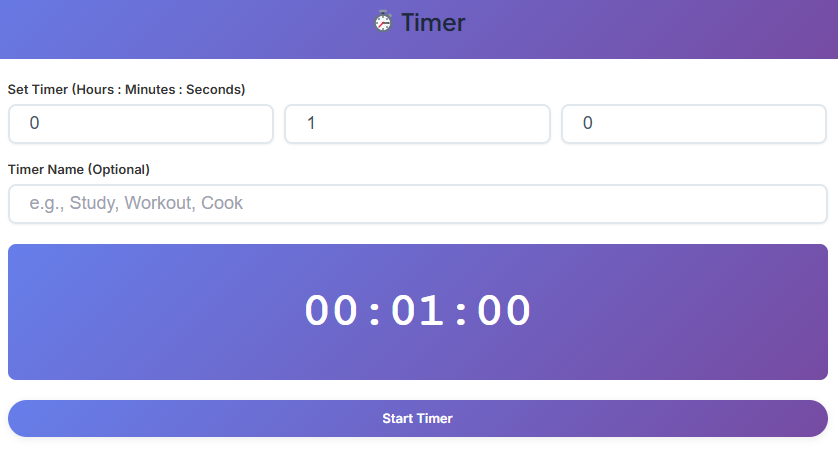
When you first land on the tool to set a timer for 5 minutes, the interface is designed for clarity. We believe that technology should get out of your way, so the input section is front and center. You will see three distinct boxes dedicated to time: Hours, Minutes, and Seconds.
To set a timer for 5 minutes, your focus will naturally be on the middle box—the Minutes field. You simply type the number “5” here. If you wanted to be extremely specific—say, five minutes and thirty seconds—you would move to the Seconds field next to it and type “30”. The Hours field is there for longer durations, but for our purpose today, it stays at zero.
Below these time inputs, there is a text field labeled “Timer Name.” This is an optional but highly useful feature. If you are juggling multiple tasks, naming your timer helps you remember exactly what that specific alarm is for. For instance, if you set a timer for 5 minutes to steep your green tea, you can type “Tea Steeping” in this box. If you are using it for a quick meditation, you might label it “Breathing Exercise.” This small detail adds a layer of organization to your countdown, transforming a generic ticking clock into a personalized productivity assistant.
Understanding the Buttons: Taking Control
Once you have entered your desired time to set a timer for 5 minutes, the control center is your next stop. We have laid out the buttons to be intuitive, ensuring you never accidentally lose your progress.
Start Timer

The most important button is the “Start” button. Once your inputs are ready—specifically when you have entered “5” in the minutes field—clicking this button initiates the action. Immediately, the static numbers transform into a live, ticking countdown. This is the moment you commit to your task. When you click start to set a timer for 5 minutes, the tool takes over the cognitive load of watching the clock for you.
Pause and Resume
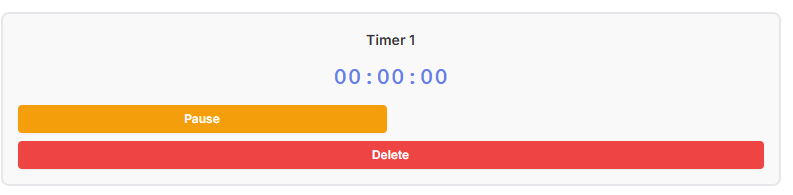
Life happens. Maybe the doorbell rings, or you get an urgent phone call right after you set a timer for 5 minutes. This is where the Pause button becomes essential. Clicking “Pause” freezes the countdown instantly. The time stops exactly where it is, holding your place until you are ready to return.
Once the interruption is handled, the Resume button allows you to pick up right where you left off. You don’t need to reset the clock or calculate how much time was remaining. You just click resume, and your 5min timer continues ticking down toward zero.
Stop & Delete
Sometimes, plans change entirely. Perhaps you finished your task early, or you realized you don’t need the timer anymore. The Stop & Delete button allows you to cancel the current operation completely. Clicking this removes the active timer from the list and clears the countdown. It effectively resets the stage, allowing you to set a timer for 5 minutes again from scratch or choose a completely different duration if your needs have shifted.
The Visual Experience: Countdown Display and Output
The heart of the tool is the large digital countdown display. After you set a timer for 5 minutes and hit start, this is where your eyes will go. We designed this display to be high-contrast and easy to read from a distance. The numbers are large, typically displayed in a clear, digital font that separates hours, minutes, and seconds with colons.
As the time elapses, the visual rhythm of the changing seconds creates a sense of urgency and progress. Seeing the numbers drop from 05:00 to 04:59 and downwards gives you immediate feedback. You know exactly how much runway you have left. This visual cue is vital for tasks that require pacing. If you set a timer for 5 minutes for a speech practice, glancing at the large display keeps you on tempo without breaking your flow.
When the timer reaches zero, the visual state changes to alert you that the time is up. This transition is clear and unmistakable, ensuring that even if you have headphones on or the volume low, a glance at the screen confirms that your set the timer for 5 minutes session has concluded.
Managing Your Time: The Active Timers List
One of the robust features of our platform is the Active Timers list. You aren’t limited to just one countdown. You might need to set a timer for 5 minutes for laundry while simultaneously running a longer timer for something else. The Active Timers list appears below the main controls, organizing all your running clocks in one neat view.
In this list, you will see the specific entry for when you set a timer for 5 minutes. It displays the name you gave it (like “Plank Exercise” or “Egg Boil”), the original duration, and the live remaining time. This dashboard view is incredibly helpful for multitasking.
Crucially, each item in this list has its own set of individual controls. You can pause just the 5-minute timer while leaving others running, or delete it entirely without affecting the rest of your schedule. This granular control means that when you set a timer for 5 minutes, it acts as an independent entity, fully manageable regardless of what else is happening on the screen.
Safe and Secure: The Info Message Box
We know that accidental browser refreshes can be a nightmare. You set a timer for 5 minutes, get deep into your work, and then accidentally hit F5 or close the tab. To combat this anxiety, our tool includes a visible Info Message Box.
This area clearly informs you that your timers are saved. Even if the page is refreshed, the tool remembers that you decided to set a timer for 5 minutes. It tracks the timestamp and restores your active timers when the page reloads. This persistent memory feature ensures reliability. You can trust that the countdown won’t vanish into the digital void if your internet flickers or your browser hiccups. It adds a layer of professional reliability to a simple tool.
Real-Life Examples: When to Set a Timer for 5 Minutes
The utility of a 5-minute block is universal. Here is how real people use this tool every day.
The Perfect Study Break
Students often use the Pomodoro technique, which typically involves 25 minutes of focus followed by a short break. When that break time arrives, they set a timer for 5 minutes. This prevents a “quick break” from turning into an hour of scrolling through social media. The timer acts as a strict supervisor. When the alarm goes off, the books open again. It maintains the momentum of study without leading to burnout.
Culinary Precision
In the kitchen, timing is flavor. A soft-boiled egg is a classic example where you must set a timer for 5 minutes exactly. Any less, and the white is runny; any more, and the yolk hardens. Similarly, steeping delicate teas or resting a steak often requires a precise 5-minute window. Using a digital tool is often easier than managing sticky, flour-covered manual dials on a stove.
The “Five-Minute Cleanup”
Housework can be overwhelming. A popular productivity hack is the “five-minute cleanup.” You set a timer for 5 minutes and challenge yourself to clean as much as possible before the clock hits zero. It turns a chore into a game. You would be amazed at how many dishes you can wash or how many toys you can pick up when you are racing against a digital clock. It beats procrastination by lowering the barrier to entry—anyone can clean for just five minutes.
Use Cases for Different Users
Students and Academics
For students, the ability to set a timer for 5 minutes is a study aid. Aside from breaks, it is useful for “speed reading” drills or brainstorming sessions. Limiting a brainstorming phase forces the brain to think faster and filter out bad ideas quickly. It creates a pressure cooker for creativity.
Office Workers and Remote Teams
In the corporate world, meetings often drag on. A great way to keep stand-up meetings efficient is to set a timer for 5 minutes for each speaker. It enforces brevity and respects everyone’s time. Furthermore, for desk workers, health experts recommend looking away from the screen regularly. You can set a timer for 5 minutes every hour to stretch, walk around, or just rest your eyes, reducing strain and fatigue.
Fitness Enthusiasts
High-Intensity Interval Training (HIIT) relies heavily on timing. While many intervals are shorter, rest periods or specific endurance holds (like a plank challenge) often require you to set a timer for 5 minutes. Having a clear, large display visible from the floor or a yoga mat is essential for keeping your workout honest and effective.
Essential Internal Tools for Productivity
While you are here to set a timer for 5 minutes, managing time often involves planning ahead or understanding the world around you. We have integrated several powerful calculators to assist with your broader scheduling needs.
Deadline Calculator
Once your 5-minute focus burst is over, you might need to look at the bigger picture. If you are working on a long-term project, knowing exactly how many days you have left is crucial for pacing yourself.
Track project deadlines and milestones
[Open Calculator →]
Moon Phase Calculator
Time isn’t just about minutes and hours; it is also about natural cycles. For those interested in astronomy, gardening by the moon, or photography planning, knowing the lunar cycle is key.
Calculate moon phases for any date
[Open Calculator →]
Sunrise Sunset Calculator
Planning a morning run or an evening photo shoot? You need to know exactly when the daylight begins and ends. This tool helps you synchronize your schedule with the sun.
Find sunrise and sunset times
[Open Calculator →]
Why Consistency Matters
The act to set a timer for 5 minutes might seem trivial, but repetition builds habits. When you consistently use a set a 5 minute timer for specific tasks, your brain starts to associate that timeframe with a specific mode of operation. It is a conditioning response.
For example, if you always set a timer for 5 minutes before responding to emails, you eventually become highly efficient at clearing your inbox. You stop overthinking replies and start communicating more directly. The constraint of time forces optimization.
Furthermore, relying on a digital tool like ours at https://swiftcalcu.com/ guarantees accuracy that mental counting cannot match. Humans are terrible at estimating time; we get distracted, we daydream, and suddenly ten minutes have passed when we thought it was two. When you set a timer for 5 minutes using a precision tool, you eliminate that margin of error.
The Psychology of the Five Minute Countdown
There is a psychological comfort in the five minute countdown. It is short enough to be bearable even for unpleasant tasks. If you are dreading a phone call or a difficult email, telling yourself “I will only do this for five minutes” makes it approachable. You set a timer for 5 minutes, and often, once you start, the momentum carries you past the buzzer.
This is often called the “5-minute rule” for procrastination. The hardest part of any task is starting. By committing to just a 5min timer, you lower the resistance. The timer acts as a safety net—you know you have an “out” when the alarm sounds, which makes entering the task less scary.
Troubleshooting Your Timer Experience
While the tool is designed to be flawless, users sometimes wonder about best practices when they set a timer for 5 minutes.
First, ensure your volume is up if you are relying on an audio cue. While the visual countdown is the primary feature, the alert sound is what snaps you back to reality.
Second, if you are using the “Timer Name” feature, be descriptive. Seeing “Timer 1” expire is less helpful than seeing “Oven Ready” expire.
Third, trust the “background” capability. Because we handle the logic to save your state, you don’t need to stare at the countdown for the entire duration. You can switch tabs, read an article, or work in a document. When you return, the tool will have continued to track the time accurately since you decided to set a timer for 5 minutes.
Precision in Everyday Life
We often underestimate how long things take. We think a shower takes five minutes, but it takes fifteen. We think checking Twitter takes two minutes, but it takes twenty. When you start to set a timer for 5 minutes for these activities, you gain a realistic understanding of your own speed and habits.
This “time audit” capability is a hidden benefit. By using the tool to set a timer for 5 minutes for routine tasks, you might realize you can actually empty the dishwasher in 4 minutes, or that it takes you exactly 5 minutes to walk to the bus stop. This knowledge allows for better planning and less stress throughout your day.
Conclusion
In the end, the decision to set a timer for 5 minutes is a decision to value your time. It transforms a vague intention into a concrete action. Whether you are a student managing study breaks, a chef perfecting a recipe, or a professional trying to squeeze productivity out of a busy day, this simple tool is your ally.
It is reliable, easy to use, and always accessible. The next time you feel overwhelmed by a big project, or just need a short, guilt-free break, remember the power of the short countdown. Come to the tool, input your time, and set a timer for 5 minutes. It is a small step that leads to better focus, better relaxation, and a more organized life. Let the countdown handle the worry, so you can handle the work.
FAQs
Can I run multiple timers at once?
Yes, you can set several timers simultaneously. For example, you can set a timer for 5 minutes for one task and another timer for 20 minutes for a different one. All your active timers will appear in the “Active Timers” list below the main controls, where you can manage each one individually.
What happens if I accidentally refresh the page?
Your timers are automatically saved. If you refresh your browser or close the tab, the tool will remember your active timers and restore them when you return to the page, ensuring your countdown continues without interruption.
How do I know when the timer is finished?
When the timer reaches zero, you will hear an audible alarm sound to get your attention. The on-screen display will also change visually to clearly indicate that the time is up.